A River in Recovery
After more than a century of fragmentation, the Klamath River is flowing freely for the first time in generations with the dismantling of four hydroelectric dams.
But the story of the Klamath didn’t end when the dams came down in 2024. Cal Poly Humboldt researchers are helping document the rebirth for a majestic river intertwined with the ecological health and cultural vitality of the region.
Across the second-largest river in California and one of the most important salmon habitats on the West Coast, University scientists are studying one of the largest restoration efforts of its kind in U.S. history to understand what happens after a river this large is set free.
They Ran Right Upthe River
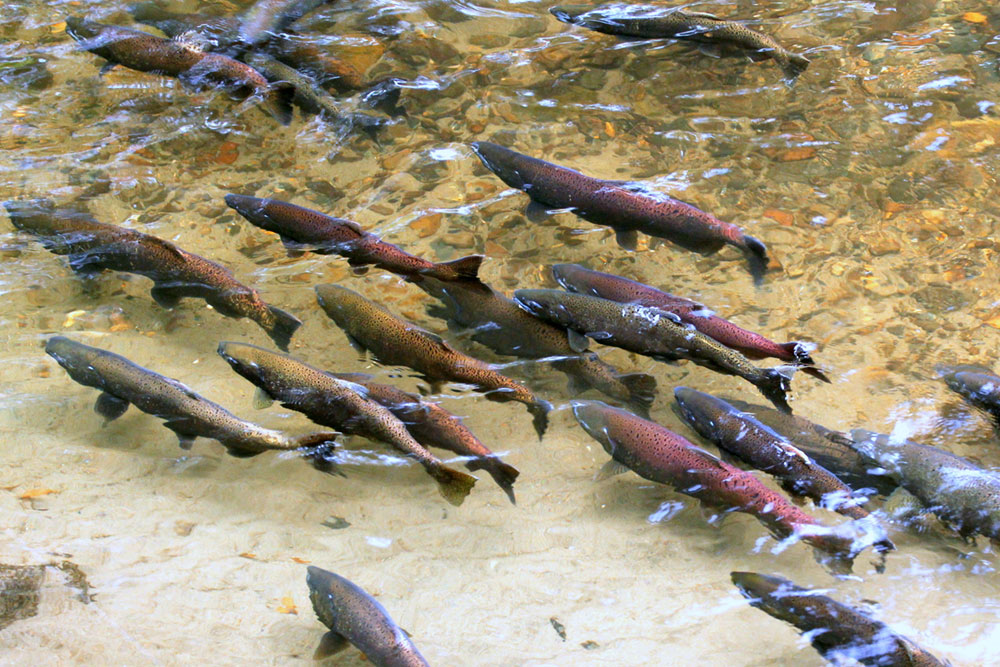
For Keith Parker (’15, Fisheries Biology, ’18, M.S. Natural Resources), the removal of the dams carries generations of meaning . A member of the Yurok Tribe, Parker joined the Tribal communities that, along with environmental groups, advocated for the dams’ removal.
Parker serves as a senior fisheries biologist for the Tribe and teaches in Cal Poly Humboldt's Environmental Science & Management and Native American Studies departments. He monitors salmon migration, tracks fish genetics, and helps guide fisheries management for the lower 44 miles of the Klamath River, the territory of the Yurok Reservation. A large part of his work focuses on improving the Chinook spring-run salmon populations, which are culturally important to Klamath Tribes as part of a first salmon ceremony each spring.
Following dam removal, he watched the river change almost immediately.
"The algae was gone!" he says. "The water temperature dropped. Salmon poured in and didn't spend five days acclimating to the warm and algal-filled estuary. They ran right up the river."
By fall 2025, thousands of adult salmon entered the estuary weeks earlier than expected. They were bright and healthy, says Parker. Some salmon still carried sea lice 30 miles upriver—a sign they were moving quickly through the river.
“That was very unusual as we observed sea lice die within days of being in fresh water before,” explains Parker.
His connection to the Klamath long predates his career as a fisheries biologist. As a member of the Yurok Tribe, Parker says his passion for fisheries biology was shaped by growing up during the Fish Wars, a decades-long struggle over water and fishing rights, where he watched relatives arrested for traditional salmon fishing.
“We are fish people,” he says. “The river is the lifeblood which supports our entire culture, from our food security and sovereignty to our religious ceremonies."
Growing up, Parker saw the river’s decline impact the ecosystem and Tribal communities.
"The building of the dams nearly killed the Klamath River, which also nearly killed Indigenous cultures," he says. "As Tribal people, we have always struggled with toxic microcystins from massive blue-green algae masses which formed behind the dams in the stagnant, hot reservoirs. Signs went up every year by the health department warning to keep children and pets out of the toxic river."
Today, he brings his expertise into the classroom, where he hopes students see restoration as a reason for optimism.
"I use the momentum of dam removal and the many restoration projects to inspire and motivate students, teaching hope during a time of climate anxiety,” he adds. “I am very positive about the future of our environment. We have some amazing rising stars among our students who will find the solutions to the problems of climate change, sustainable energy, clean water, and more for humanity."
Keith Parker
Location of research: Trinity Fish Hatchery, Lower 44 miles of the Klamath
Tracking Salmon Through Genetics
Fisheries biologist and Cal Poly Humboldt faculty member Keith Parker combines field monitoring, genetic analysis, and long-term datasets to better understand Klamath River fish populations. His team monitors fish communities in the lower Klamath River using methods including seining, light traps, baited video surveys, and environmental DNA sampling.
Since 2018, Parker has led a first-of-its-kind effort to genetically sample every spring- and fall-run Chinook salmon returning to the Trinity River Hatchery. The data help researchers distinguish salmon lineages, evaluate genetic diversity, and improve hatchery management practices. His team also collects biological data—including age, size, and migration timing—that help inform annual salmon run forecasts and fisheries management decisions throughout the region. He also helped identify two new Pacific lamprey species, which he named using words from the Yurok language.
The River is Healing
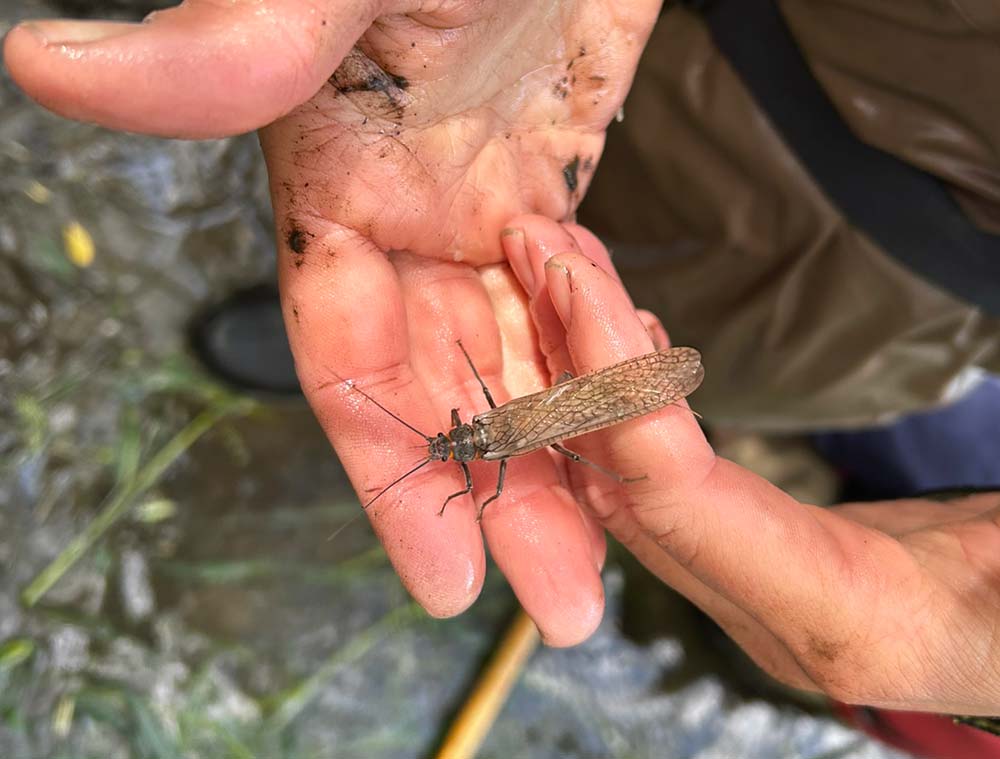
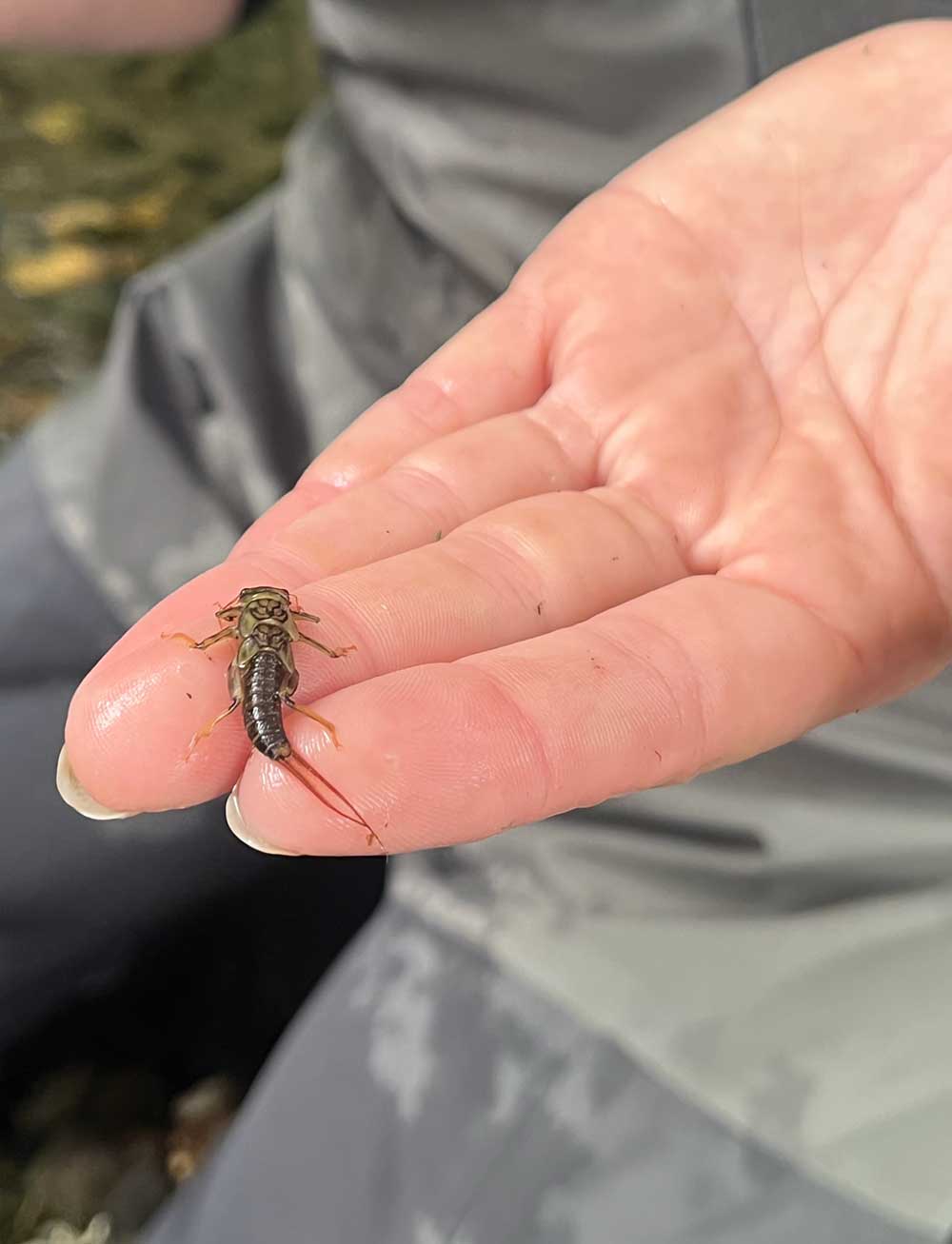
Since 2022, Environmental Science & Management Professor Alison O'Dowd and her student researchers have tracked one of the river's most important communities—aquatic invertebrates .
The organisms, including aquatic larvae of insects such as mayflies, stoneflies, and caddisflies form the foundation of the Klamath's food web. They are an important food source for salmonids and an early indicator of how the river is responding. To study them, O'Dowd and her team collected invertebrates drifting downstream and living in the riverbed.
Her research, which also analyzes fish diets, focuses on food availability for fish downstream of the former Iron Gate Dam before, during, and after dam removal.
One of the team's biggest questions was whether the massive pulse of sediment released during reservoir drawdown and dam removal would wipe out the aquatic insects that young salmon depend on for food, potentially slowing the fishes' recovery. Previous studies following dam removals on Washington's Elwha River found declines in fish food availability. But the Klamath told a different story.
While O’Dowd says that sediment released during the final stages of dam removal temporarily reduced the abundance of aquatic invertebrates, food resources for salmon had rebounded within months, suggesting the Klamath River was remarkably resilient.
"Over the longer term, things have really bounced back and actually improved beyond what they were prior to dam removal in some cases," she says.
The recovery carries significance beyond ecology, O'Dowd explains. It reflects the healing of a river that has long been central to Indigenous communities.
"The Klamath is a really magical place, shaped by deep cultural and ecological significance for Indigenous communities who have lived along its banks for thousands of years."
But, she emphasizes, this is only the beginning. "The restoration is only one step in a very long arc of the river recovering."
Even so, she says, "the river is healing."
Alison O'Dowd
Location of research: Bogus Creek, Beaver Creek, Horse
Creek, Seiad Creek
Examining the River’s Food Web
Using methods such as drift nets, Environmental Science & Management Professor Alison O’Dowd and her graduate students survey aquatic invertebrates to understand how dam removal is reshaping the Klamath River’s food web. They also study what fish are eating by collaborating with researchers at UC Davis and the Karuk Tribe on non-lethal diet analyses, including stomach flushing and fin clipping. Together, these approaches help researchers understand how energy moves through the ecosystem and track how the river is changing over time.
Reading the River
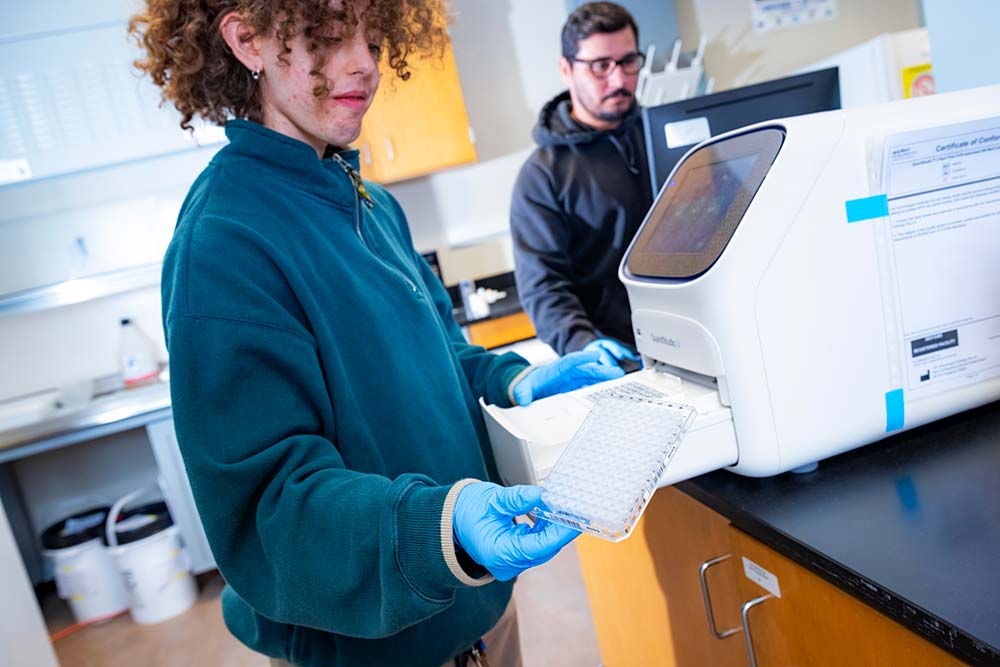
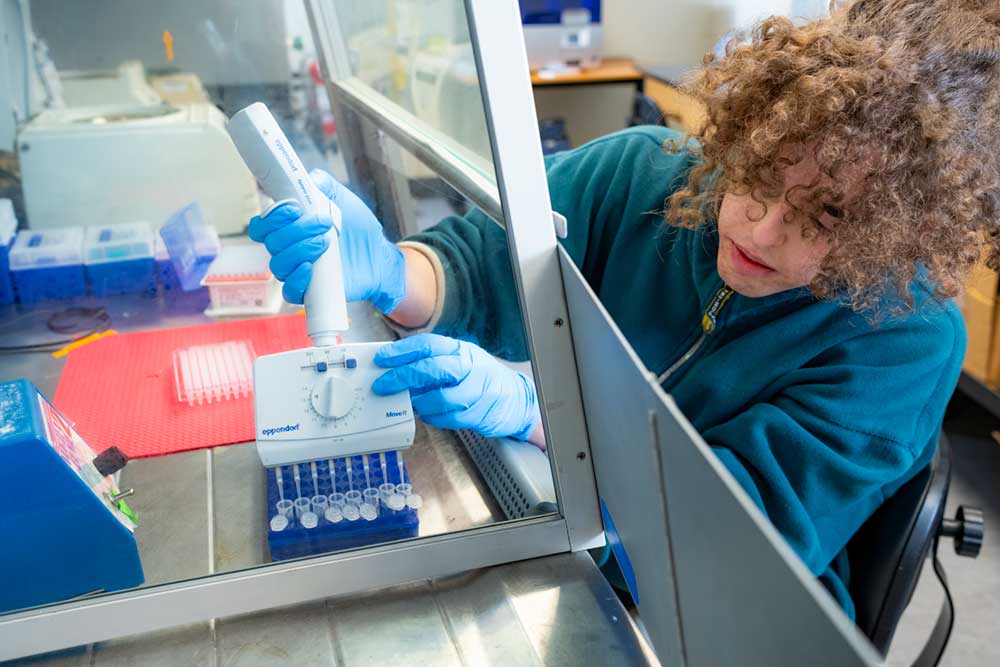
As fish move through a river, they continuously shed tiny traces of genetic material—called environmental DNA, or eDNA—through skin cells, mucus, scales, and waste. By collecting and analyzing water samples, scientists can identify the species present and estimate relative abundance, making eDNA a non-invasive, highly sensitive, and cost-effective approach for monitoring biodiversity in aquatic ecosystems.
Together with a team of graduate and undergraduate students and researchers, Fisheries Biology Professor Andrew Kinziger is using state-of-the-art eDNA technology to document one of the most significant ecological events in the Klamath River's history.
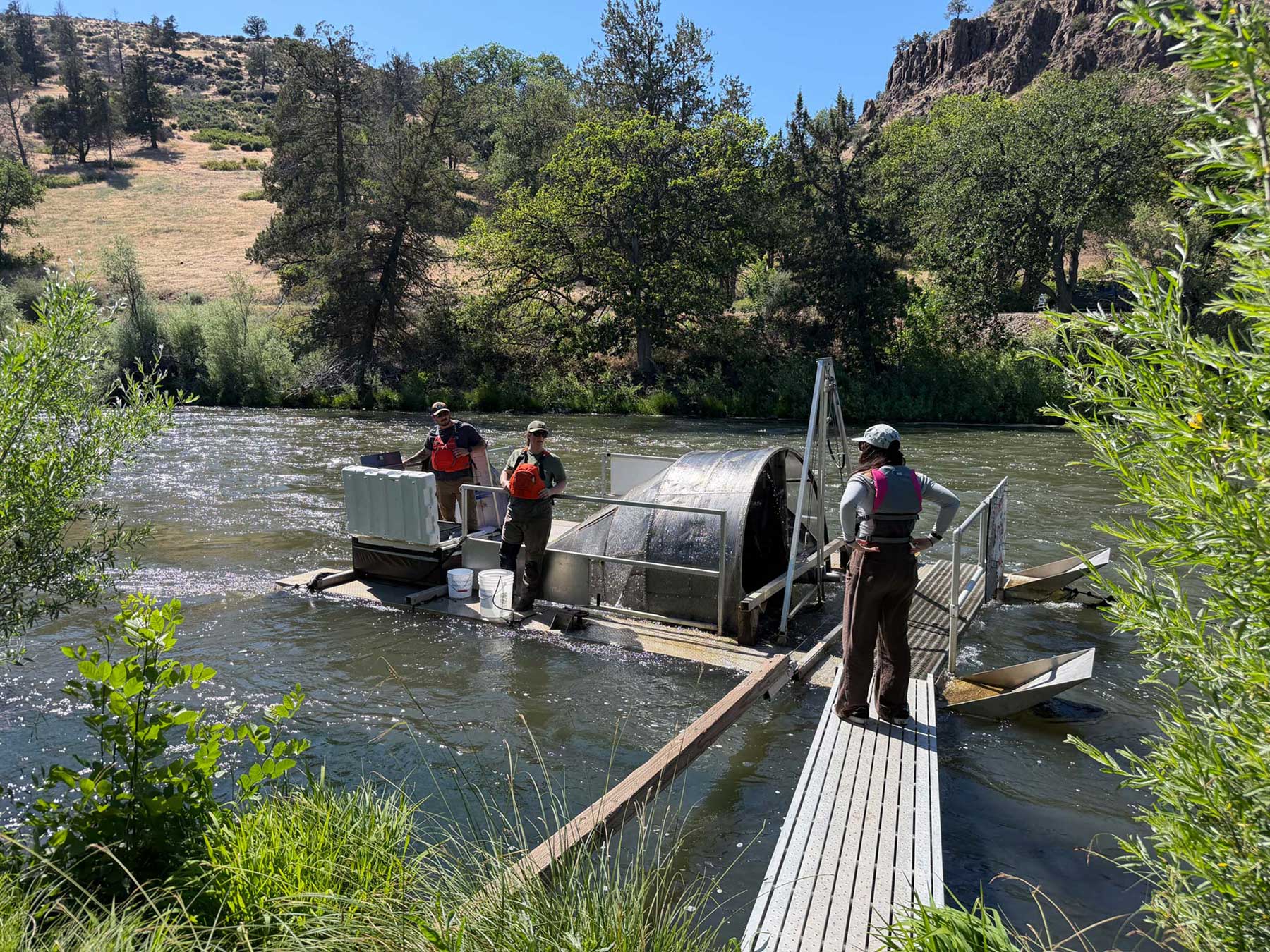
An automated eDNA sampler, capable of filtering and preserving water samples at pre-programmed intervals, has been operating near the former Iron Gate Dam for more than a year. It collects daily samples and creates an unprecedented genetic record of fish recolonizing the river following the largest dam removal project in U.S. history.
Each week, members of the research team retrieve the preserved samples and bring them back to Cal Poly Humboldt, where they analyze them using techniques including eDNA metabarcoding to identify the fish community and track how it changes over time. “Environmental DNA gives us a powerful new way to monitor fish populations without ever having to capture or handle the animals,” Kinziger says. “We’re creating a continuous record of how the river responds as salmon and steelhead return to habitat that has been inaccessible for more than a century.”
The project tracks Chinook salmon, coho salmon, and steelhead as they return to newly reopened habitat beyond the former upstream limit of migration at Iron Gate Dam. It’s also providing a comprehensive look at what other fish species and aquatic invertebrates are present, allowing researchers to monitor biodiversity, track fish movements, and estimate how many fish continue upstream.
Kinziger has studied the Klamath River for more than two decades, including co-authoring a landmark 2020 Science paper that identified the genetic basis of migration timing in Chinook salmon. That research showed that a single genetic marker distinguishes spring-run and fall-run Chinook salmon, providing a powerful tool for understanding the evolution and ecology of salmon populations and supporting conservation and monitoring efforts throughout the Klamath Basin.
Today, the eDNA monitoring program is building on that foundation, using advanced genomic tools to document, in unprecedented detail, how fish communities are responding to a once-in-a-century river restoration. The research is also helping develop new eDNA approaches that may eventually distinguish spring-run and fall-run Chinook directly from water samples.
Together, these efforts are providing scientists, Tribal partners, and resource managers with new insights into how salmon and steelhead are recolonizing a river that, for the first time in generations, is once again flowing freely from headwaters toward the Pacific Ocean.
Andrew Kinziger
Location of research: Iron Gate
Reading the River through DNA
Using an automated eDNA sampler mounted on a pontoon near the former Iron Gate Dam, Fisheries Biology Professor Andrew Kinziger monitors changes in the Klamath River's fish communities. The eDNA sampler collects water throughout the week, capturing DNA shed by fish and other aquatic organisms. By sequencing millions of DNA fragments, researchers can identify which species are present and track how detections and relative DNA signals change over time—all without handling fish.
Natural Experiment in Adaptation
For Fisheries Biology Professor Darren Ward—who has worked on the Klamath since 2010—the impacts of dam removal are dramatic.
Before removal, summer fieldwork was challenging. The reservoirs held warm, foul-smelling water that often made conditions difficult for those working on or living in the water. But by fall 2024, just months after the first dam came down, salmon were returning.
Researchers expected the fish to eventually recolonize upstream habitats. What surprised them was how quickly it happened.
“Why they moved so quickly into these habitats,” Ward says, “I can’t explain it. But the Klamath is a river again, and it’s starting to create the habitat that fish need.”
As the river adjusts, Ward and graduate student Olivia Black are launching a new phase of research on how salmon respond to newly accessible habitat.
While salmon typically return to the streams where they were born, fish are now spawning in tributaries they haven't reached in generations. Now, scientists are seeing salmon in nearly every corner of the Klamath, including Shovel and Jenny Creek—areas previously cut off by the dams—where they’ve seen hundreds of adult fish.
By studying Shovel Creek and Jenny Creek above the former dam sites, Ward and Black hope to understand how quickly salmon can adapt to new spawning and rearing habitats where they do not have a long evolutionary history, a process known as a plastic response.
"This is a rare opportunity in fisheries science," Ward says. "We're getting to watch the first few generations of fish figure this out. That's something we almost never get to see."
Darren Ward
Location of research: Jenny Creek, Shovel Creek
Following Salmon into new Habitat
Jenny Creek and Shovel Creek are the first tributaries salmon encounter above the former Iron Gate Dam, and they provide different environments for the fish. Shovel Creek is a small, cold, groundwater-fed stream, while Jenny Creek is larger, more dependent on seasonal precipitation like snowmelt, and gets warmer in the summer. Fisheries Biology Professor Darren Ward and graduate student Olivia Black are tracking the first generations of salmon spawning in both creeks to learn how the fish adapt to these newly reopened habitats. By tagging juvenile salmon and monitoring them, they'll investigate how quickly they grow, their migration strategies, how old they are when they spawn, and more.