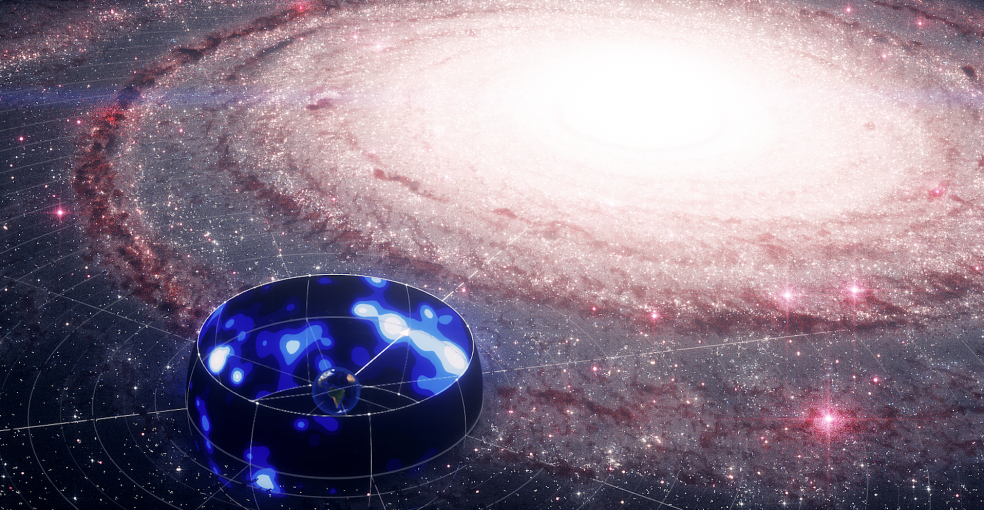
Cal Poly Humboldt’s supercomputers are part of the National Research Platform, which pools impressive supercomputing power across more than 70 institutions around the country, and is offered free to U.S. nonprofit research and education. Funded by the National Science Foundation, the platform is governed by the community that contributes to it.
The shared supercomputing power housed at Cal Poly Humboldt is contributing to groundbreaking international research, including the IceCube Neutrino Observatory, led by 2026 Nobel Prize in Physics recipient Francis Halzen. The first detector of its kind, IceCube is designed to observe the cosmos from deep within the South Pole ice, exposing never before seen gamma ray bursts, black holes, and neutron stars.
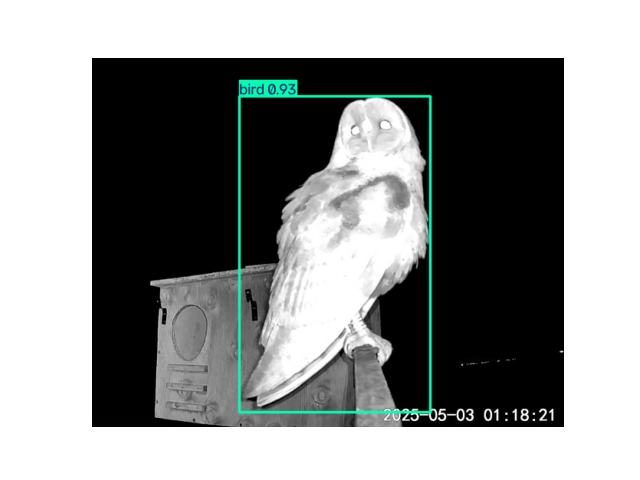
Closer to home, Lauren Jackson (‘26, M.S. Natural Resources) and Wildlife Professor Matt Johnson have been using supercomputing power for their barn owl research in partnership with Cal Poly San Luis Obispo Professor Tim Bean. Brian Campbell, the Humboldt High Performance Computing Center’s research computing specialist, developed an application using Computer Vision—a field of AI that enables computers to see, identify, and understand visual information—to process over 9,000 hours of field footage and detect barn owl activity, allowing researchers to better understand and interpret their behaviors.
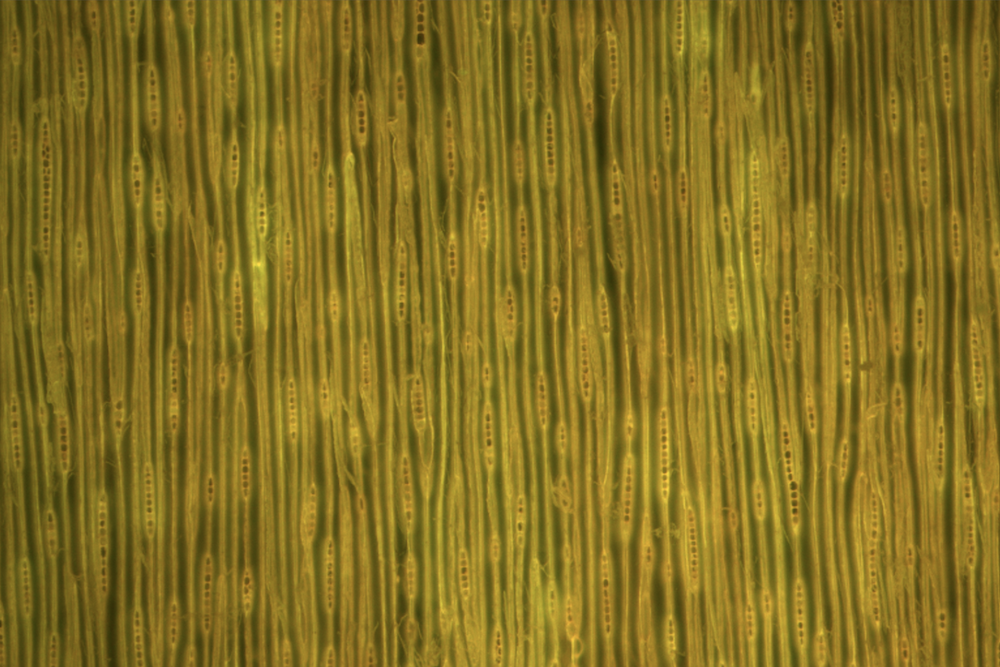
Supercomputing power is also vital to Biological Sciences Professor Alana Chin’s research on redwood trees. Chin takes core samples of redwood heartwood and uses particle accelerator-based X-ray scans (microCT) to examine their cellular structures and the contents of heartwood. The process trains neural network models to recognize images and make predictive models from the tree anatomy.
“The technology allows us to see these wood structures in super high resolution to see every cell,” says Chin. “The models use known wood anatomy to recognize cells so we can better understand differences in wood quality in our forests.”
“Some of the research conducted at Cal Poly Humboldt requires computing power far beyond what a traditional desktop computer can provide,” says Cade Webb, Acting CIO of Information Technology Services (ITS). “Our on-campus servers provide the high-performance computing resources needed to advance groundbreaking research, support scientific discovery, and enable collaboration with researchers across the country.”
Faculty and student researchers who are interested in exploring this unique resource on campus are encouraged to contact Brian Campbell at the Humboldt High Performance Computing Center.