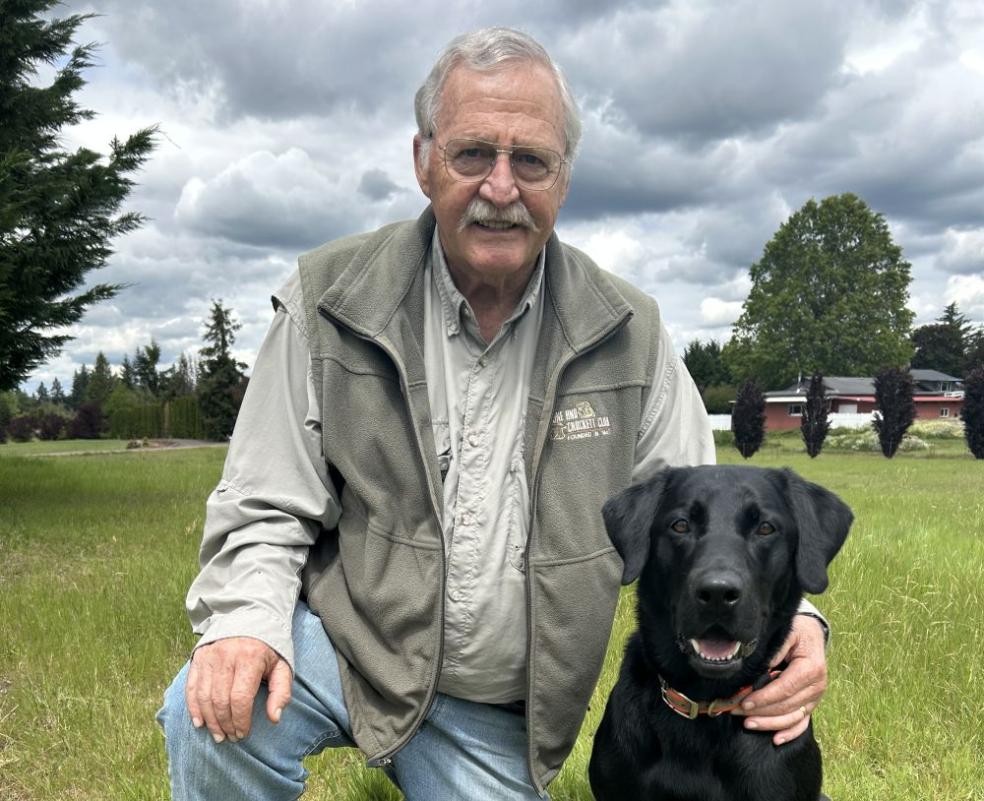
That patience, curiosity, and deep respect for wildlife helped shape a career that now includes one of the field’s highest honors. Bowyer is the 2025 recipient of the Aldo Leopold Memorial Award from The Wildlife Society, which recognizes lifetime contributions to wildlife conservation.
“That’s a tremendous honor,” Bowyer says. “It’s not something you ever think is going to happen.”
For Bowyer, the path to that honor began, in many ways, at Humboldt.
Raised in Ojai, California, a small town near the Topatopa Mountains and Los Padres National Forest, Bowyer grew up hunting and fishing with his father. After completing junior college, he drove north to Humboldt to learn more about its wildlife program and, as it happened, to talk with the football coach.
“The quality of the wildlife program, that was the real lure,” Bowyer says. “But I wanted a chance to play a little football, too, so that worked out well.”
Bowyer laughs about his football days, saying he played on the 1968 championship team but “mostly played left-right-out.” Still, Humboldt offered exactly what he was looking for: A place where the outdoors was never far away and where wildlife biology was taught through hands-on learning.
“I like to hunt and fish and do things in the outdoors, and there was an opportunity to do that there that really impressed me. And then the applied nature of the wildlife program,” Bowyer says.
As an undergraduate, Bowyer began to understand what it really meant to be a wildlife biologist.
“There was a lot more to being a wildlife biologist than just hunting and fishing and enjoying the outdoors,” Bowyer says. “I needed to focus more on those aspects, but with the notion that I could be a field biologist. That was really important to me.”
After graduating, Bowyer served in the United States Army Reserves during the Vietnam War, training as a combat medic and X-ray technician. The work was important, but it also reminded him where he belonged.
“Bowyer returned to Humboldt for his master’s degree. It was the only graduate school he applied to.
“I wanted to come back to Humboldt because of the good experiences I’d had there,” he says.
One of those experiences came through professor Dave Kitchen, who became one of Bowyer’s most influential mentors. During Bowyer’s graduate program, Kitchen took him to Gold Bluffs Beach near Orick, California, where they watched elk together.
“He said, ‘You can do a thesis where we quantify what those elk are doing, and just watch them,’” Bowyer recalls. “I was really intrigued. Then I really wanted to be outdoors and work with the animals and spend time in the field.”
That moment helped set the tone for the rest of his career. Bowyer went on to earn a Ph.D. from the University of Michigan, where he paired Humboldt’s applied training with a more theoretical approach. The combination, he says, was ideal.
“Humboldt was very applied and hands-on. Michigan was highly theoretical,” Bowyer says. “It created a nice mix for me, actually, for my career.”
Afterward, his career as a faculty member took him from Unity College in Maine to the University of Alaska, Fairbanks, and Idaho State University. He studied mule deer, moose, elk, river otters, and other species, publishing widely on wildlife ecology, behavior, conservation, and management. In Alaska, he spent 10 years studying moose in the Denali wilderness.
Bowyer also became a mentor himself, guiding more than 30 graduate students, about half of them Ph.D. students. Their impact continues through agencies, universities, and conservation organizations across the West.
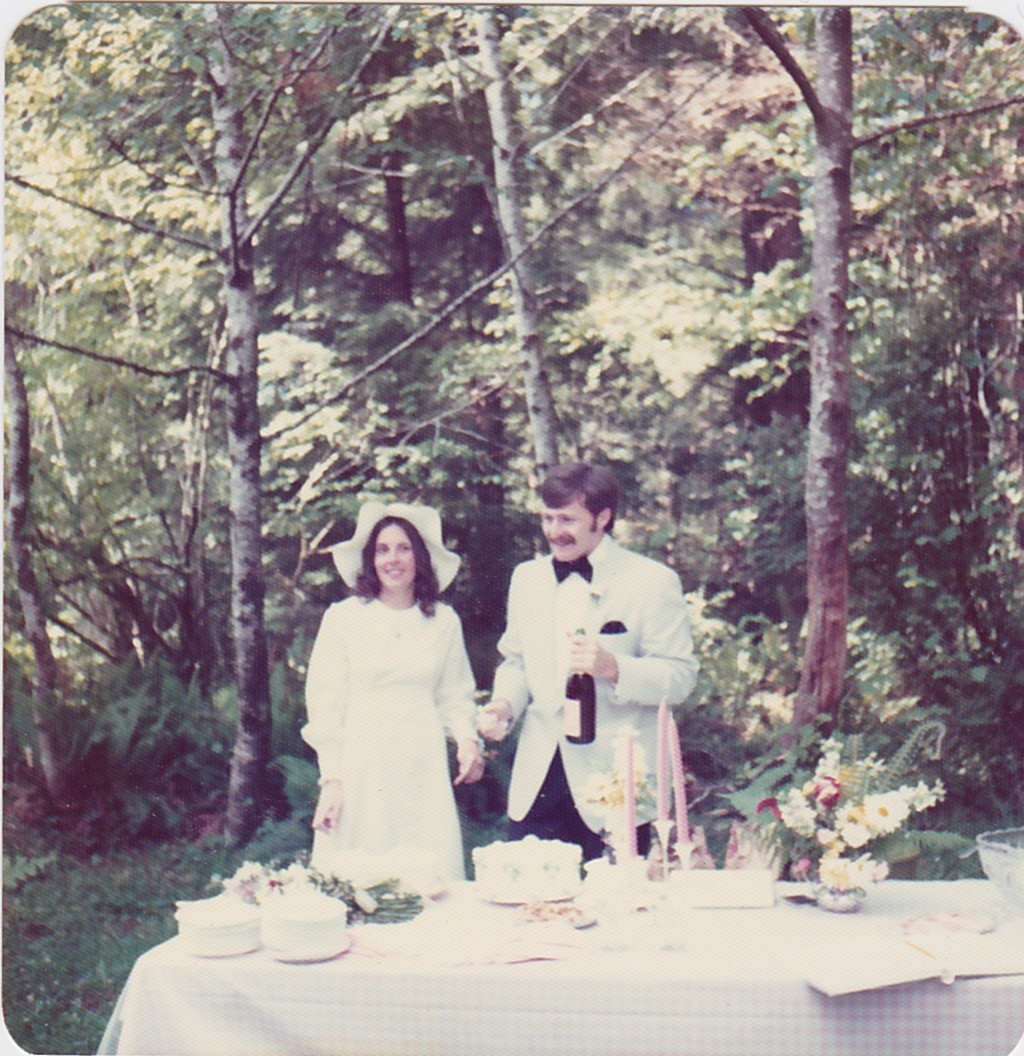
Bowyer’s Humboldt story is also a love story. While completing his master’s research, he met Karolyn (‘72, Psychology), who was finishing her teaching credential. They married in Prairie Creek Redwoods State Park, then built a life that took them from Michigan to Maine, Alaska, Idaho, and eventually Oregon. For their 50th wedding anniversary, they returned to Prairie Creek and visited the small house where they first lived.
His favorite Humboldt moments highlight the easy joy of student life: fishing the Eel River with roommates, hiking near Clam Beach, hunting near Happy Camp, duck hunting at Big Lagoon, and spending time at Gold Bluffs Beach and Fern Canyon.
Some memories were more dramatic. As a student, Bowyer was part of an Army Reserve unit activated during the 1974 Eel River Flood near Ferndale. They drove five-ton trucks to rescue people stranded in farmhouses.
Though he retired in 2016, Bowyer has not stepped away from science. He continues to publish, write, serve on student committees, and hold an appointment as senior research faculty with the Institute of Arctic Biology. In 2022, he published a book on sexual segregation in wildlife, exploring why males and females of some species live apart for much of the year and what that means for ecology and management.
What keeps him going is simple.
“I think it’s because science is fun,” Bowyer says. “If you don’t stay curious, you age rapidly.”