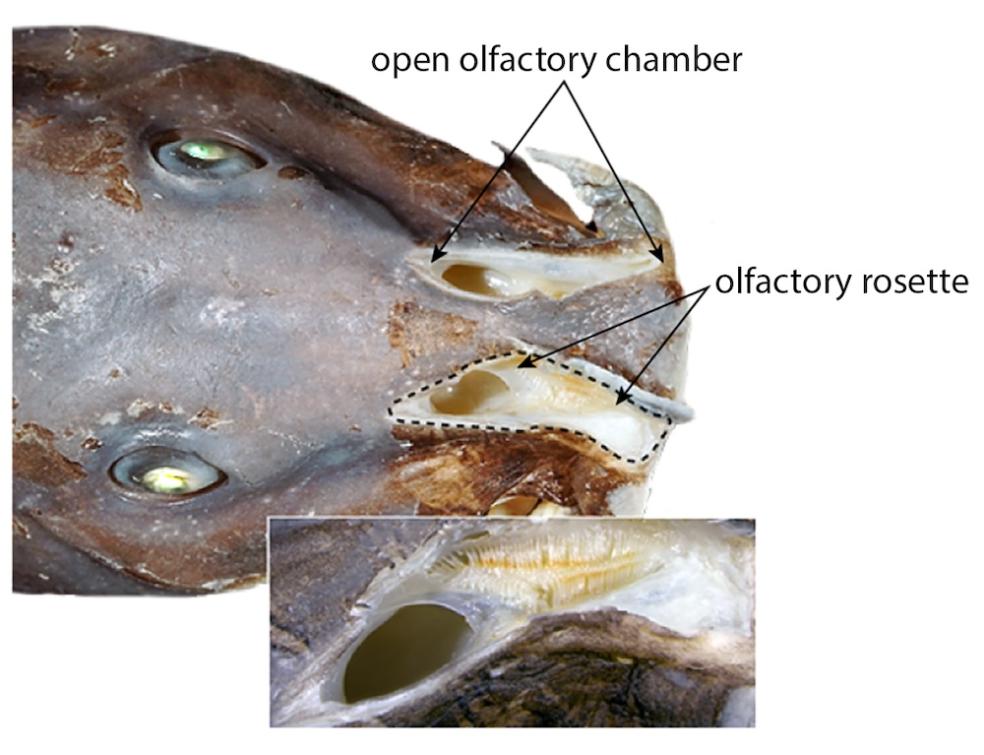
According to research published in the peer-reviewed journal Ichthyology & Herpetology, a group of catfishes from the Congo Basin has a unique nasal structure that may allow them to actively draw water and scent molecules through their noses, a mechanism unlike anything described before in fishes.
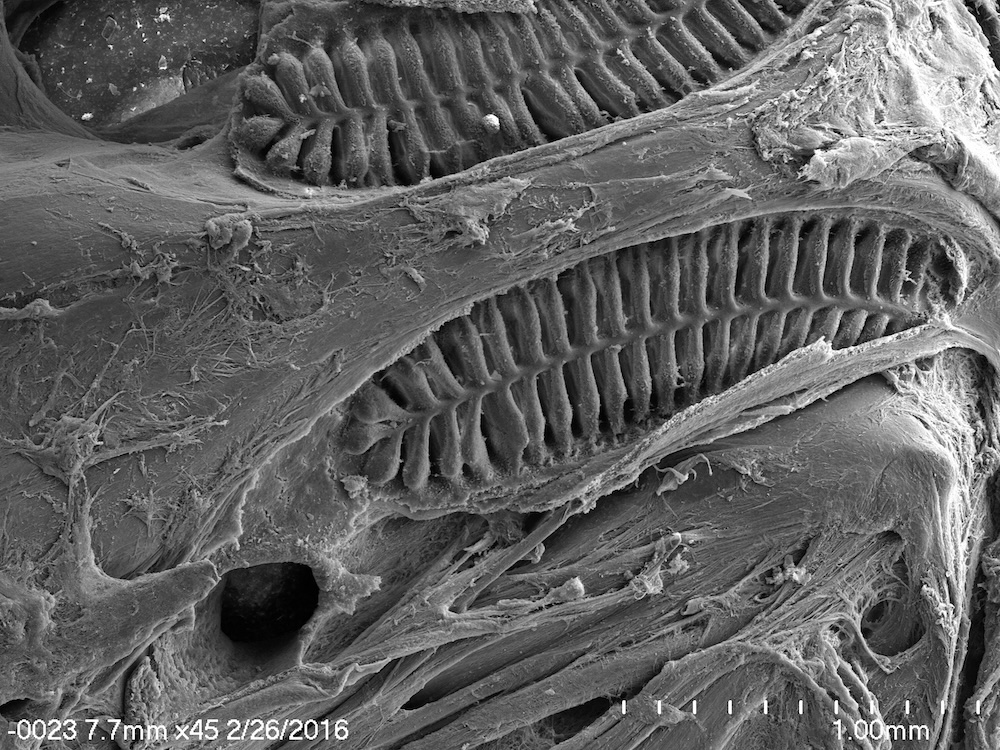
The study, co-authored by Cal Poly Humboldt Biological Sciences Professor Allison Bronson and American Museum of Natural History (AMNH) ichthyologist Melanie Stiassny, found that a thin membrane suspends the fishes' sensory tissue within the nasal cavity. Unlike most fishes, which rely on tiny beating cilia to move water across smell receptors like a conveyor belt, this anatomy may allow the catfishes to actively pull water in or "sniff.”
“In most fishes, tiny cilia beat within the nose to generate a water current that brings scents toward the sensory tissue,” says Bronson. “But, instead, these fish can sniff water and scent molecules into the nose, which may heighten their odorant-sensing abilities.”
This may prove advantageous in the low-visibility habitats of the Congo River’s tributaries, Bronson explains.
A team of Congolese and American scientists used traditional dissection, scanning electron microscopy, histological sectioning, and high-resolution CT scanning to examine the bizarre nasal anatomy of these fish. Bronson’s previous expertise in histology and CT scanning, combined with Stiassny’s extensive knowledge about Congolese fishes, made the study possible.
This July, Bronson was awarded the American Society of Ichthyologists & Herpetologists (ASIH) “Best Paper by a Young Scholar in Ichthyology” award for the paper, titled “Novel Nasal Anatomy Suggests Enhanced Olfactory Acuity in Auchenoglanidid Catfishes (Siluriformes: Auchenoglanididae)." The annual prize honors the best publications from the society’s peer-reviewed journal Ichthyology & Herpetology. Bronson received the award at the Joint Meeting of Ichthyologists and Herpetologists (JMIH) held in New Orleans.
The award is both a professional and a personal honor for Bronson, who has been a member of the journal’s associated scientific society, the American Society of Ichthyologists & Herpetologists (ASIH) since she was an undergraduate at Cal Poly Humboldt. Her first JMIH conference was as a student of Cal Poly Humboldt Professor Emeritus John Reiss in 2014, presenting work on rough-skinned newts. She’s returned to the conference almost every year since. At this year’s meeting, 10 Bronson Lab students presented their research.
“I owe a lot of my success as a scientist to the supportive community of ASIH,” Bronson says, “Science makes the most interesting advancements when researchers work together.”