
Long before he became one of the first graduates of Cal Poly Humboldt’s Forestry program, Archibald was a high school student in Ukiah with no clear path forward. That changed after a chance introduction to Humboldt.
“I had no immediate plans for my future, but the two-year Forestry program caught my eye after seeing a description of the Forestry-Lumbering program after a performance from Humboldt’s Theatre Department at my high school,” Archibald recalls.
Soon after graduating from high school, Archibald landed a job with a local consulting forester. With a few paychecks saved, he made a life-changing decision: to enroll at Humboldt.
“I had been working in the field, and Humboldt gave me the opportunity to turn that experience into a career,” Archibald says.
When Archibald arrived on campus in 1954, the Forestry program was still in its infancy, with just two professors and a small cohort of students. What it lacked in size, it made up for in hands-on learning and access to the surrounding working forests.
“One major advantage of the college was its proximity to logging operations, forests, and native plants,” Archibald says. “We had weekly field trips. You learned by being out there.”
Archibald’s practical experience quickly set him apart. He worked as a lab assistant to Forestry Professor Ed Pierson, contributed to classroom materials, and earned scholarships from logging companies where he worked that helped cover essential costs.
In 1957, Humboldt expanded its program to offer a four-year degree in Forest Management. Archibald was among the first to take that step, becoming part of the inaugural graduating class in 1959.
“I’m sometimes referred to as the first Forestry graduate—alphabetically,” Archibald jokes. “I assure people it has nothing to do with my GPA.”
After graduating, he began a new chapter of service by enlisting in the U.S. Navy and attending Officer Candidate School. By July, he was commissioned as an Ensign and spent three years on active duty, including time on an Admiral’s staff in Guam and providing communications support at Naval Air Station Seattle. He retired with the rank of commander. He married his wife, Margaret, in Honolulu in 1960. After completing active duty in 1962, he served in the Ready Reserves for over twenty years, while also building a 33-year career with the Bureau of Land Management, overseeing landscapes across the West.
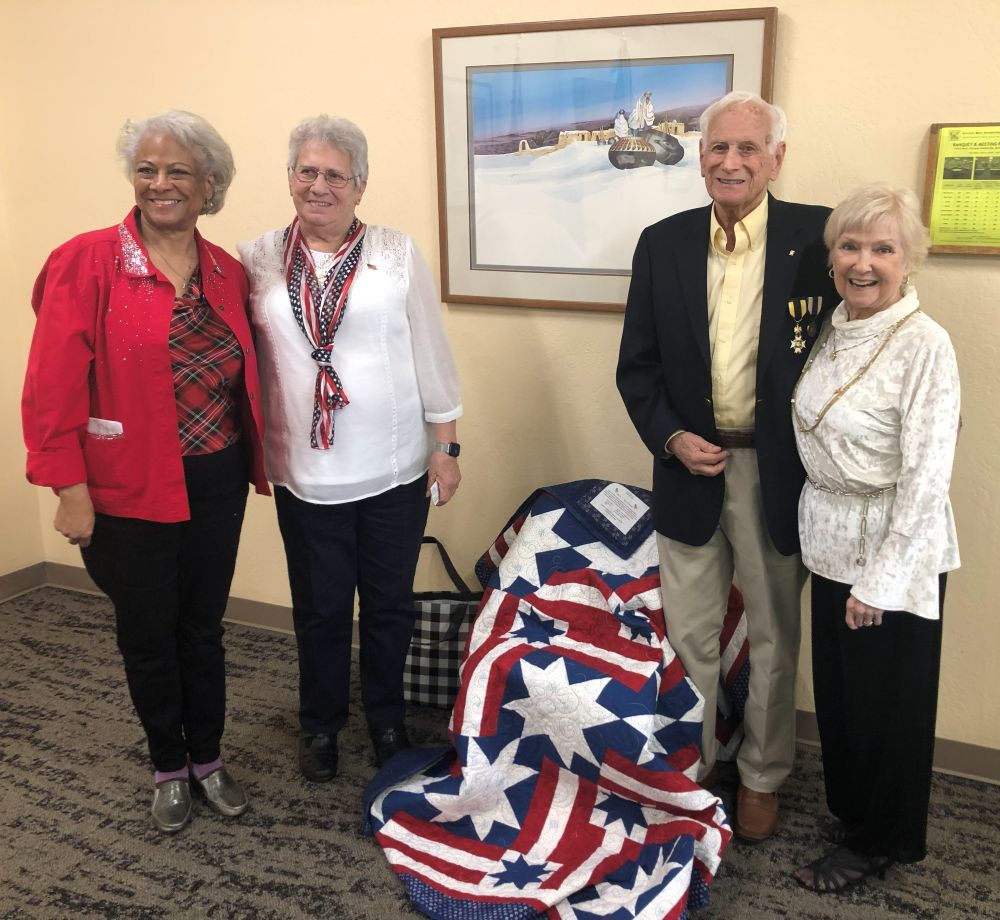
“I recognize that my careers, both military and civilian, would not have been possible without my Humboldt degree,” Archibald says. “The foundation of my success started there.”
Years later, Archibald found himself returning to Humboldt—not as a student, but as a steward of its future. His commitment to scholarships began through volunteer work supporting students and military families. In 2013, he helped organize the Pathfinders Commemorative Scholarship to honor his graduating class.
Now, with the creation of the Archibald Forestry Pathfinders Scholarship Endowment, Archibald and his wife, Margaret, are ensuring that support will continue for generations.
“The main intent is to create a legacy for my family and me,” Archibald says. “I want to make sure this opportunity continues.”
The endowment will provide annual scholarships to Forestry students in perpetuity, helping them pursue the same kind of education that shaped Archibald’s life.
“I hope it gives students the support they need to stay focused on their studies and their future,” he says. “Even a small amount can make a big difference.”
In their retirement, Bob and Margaret Archibald have quietly and consistently supported a wide range of causes that reflect their lifelong values of service, stewardship, and community. Through annual gifts, they have contributed to organizations that uplift veterans and their families, protect public lands and historic places, and provide humanitarian aid worldwide.
From supporting Honor Flights for veterans and programs like Wreaths Across America and Toys for Tots, to advancing conservation efforts through land trusts and preservation societies, to giving to organizations like Doctors Without Borders and St. Jude Children’s Research Hospital, and Cal Poly Humboldt Forestry students, the Archibalds’ generosity reaches far beyond any single cause. Their approach to giving mirrors Bob’s own path—grounded in gratitude, guided by purpose, and rooted in a belief that even modest contributions can make a meaningful difference.
For Archibald, giving back is both personal and purposeful. It’s a way to honor the past while investing in what comes next.
“What does it mean to give this kind of support? It means helping someone else find their path, just like I did,” Archibald says.
You can help students find their path, too. Make a gift to support scholarships and hands-on learning opportunities at Cal Poly Humboldt. Contact the Cal Poly Humboldt Foundation at giving@humboldt.edu or (707) 826-5200 to learn more.
Editor's note: The story has been updated to highlight the Archibald family's generous history of giving and to better reflect Bob's career in the U.S. Navy and his retirement as a commander.