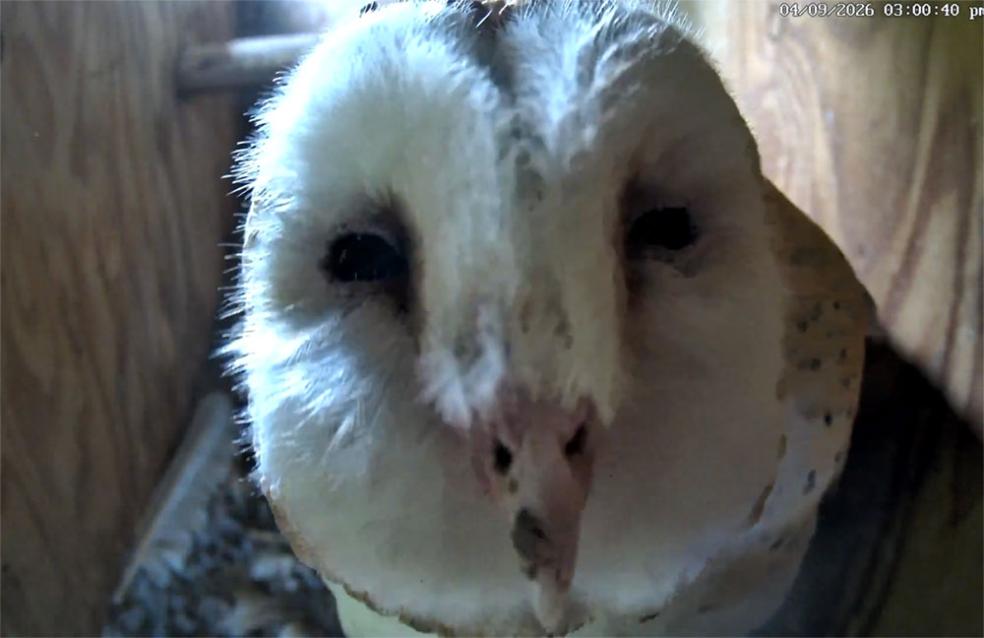
Cal Poly Humboldt Wildlife Professor Matt Johnson and Wildlife graduate student Katherine Larson, along with UC Davis Wildlife Professor Roger Baldwin, found that barn owls reduce the number of rodents in vineyards not only by eating them but also scaring them, according to research. The study, published in Ecological Applications in March, provides insight into environmentally friendly natural pest control methods.
The recent study examines whether barn owls help control rodents in vineyards in Napa Valley, California, and how vegetation plays a role in the effectiveness of owls.
Studying six vineyards in 2023, researchers used food trays to gauge the amount of food rodents left behind—an indication of the threat they felt from predators—while monitoring nearby barn owl nest boxes to measure owl activity.
Results revealed:
- 38–52% fewer rodents in vineyards with more barn owls than those with few or no owls.
- Rodents also behaved more cautiously, showing a 16–38% increase in fear of predators.
- Because barn owls hunt mainly by relying on hearing and rodents rely mostly on vision to detect danger, areas with more plant cover appeared to give the owls an advantage.
The rodents’ fear factor study is an extension of Johnson’s longtime barn owl research. Since 2015, Johnson’s team has monitored more than 500 nest boxes installed in California vineyards throughout California Wine Country.
They found:
- 30-75% of the boxes are occupied by breeding owls in a given year.
- One family of barn owls can remove up to 4,000 rodents each year.
- Barn owls prefer tall wooden nest boxes (24" tall), mounted on tall poles (>12 feet), with abundant grasslands and with little forest cover nearby.
- It can take 1-3 years for a barn owl to move into a nest box.
“For years, we’ve studied how wildlife and agriculture can work together. Wine grape systems provide a unique opportunity to demonstrate that biodiversity and farming can not only coexist but can create mutual benefits,” says Johnson.
With a commitment to biodiversity since its inception almost 50 years ago, iconic Napa winery Grgich Hills Estate has long partnered with Johnson’s barn owl research. Guided by a deep sense of environmental responsibility, the winery is dedicated to protecting the Earth and, more importantly, ensuring a healthy planet for future generations. Grgich Hills’ sustainable philosophy intertwines regenerative agriculture and overarching biodiversity, making a case for the importance of barn owl research and its place in making its vineyards and, in turn, the planet immensely better.
“Our farming philosophy emphasizes maintaining abundant biodiversity, creating an ecological balance of plants, animals, and microbes on all the land we manage. Encouraging the presence and reproduction of top predators such as owls is crucial to maintaining this equilibrium and ensures that our vines are not overeaten by rodents,” says Ivo Jeramaz, Grgich Hills winemaker and vice president of Vineyards and Production. “We’ve been a part of Professor Johnson’s study since its inception in 2015, and the data he has shared with us over his years of research has been invaluable. It has allowed us to make informed decisions regarding our integrated pest management system, which has reduced rodent pressure significantly in our vineyards over the years.”