Organized around the theme, “We Are Here! Fighting Fascism & Erasure,” this year’s program brings students, faculty, staff, and community members together to examine racial injustice, authoritarianism, and the possibilities of collective resistance.
Through workshops, presentations, performances, and facilitated conversations, the weeklong event creates opportunities to consider how racism intersects with other forms of oppression. CDOR welcomes people of all backgrounds into a shared process of reflection, learning, and action.
The 2026 theme focuses on the relationship between fascism, racism, and ultranationalism. It asks participants to examine how political narratives can be used to enforce social hierarchies, designate groups as outsiders, and weaken democratic institutions.
The organizing committee, made up of students, faculty, and staff, aims to explore what it means to fight fascism from a “poly-TEK” vantage point, one that names and engages with Indigenous perspectives like Traditional Ecological Knowledge in a “polytechnic” university. Speakers will talk about the relationships between AI, colonialism, and eugenics.
“We were thinking about the violence that's happening in our communities, and we tend to not name it what it is,” says Paul Michael Atienza, professor of Critical Race, Gender & Sexuality Studies, who is part of the CDOR organizing committee. “We hope that by calling fascism what it is, we can have more productive conversations about what our communities need to do to remain steadfast in fighting for their rights and freedoms.”
“We don’t talk about race in our everyday lives, and this is a whole week where the intersection of race, class, gender, sexuality gets highlighted in a really supportive and principled space for people to ask questions they may be afraid to ask,” Atienza says.
Rather than treating resistance solely as a response to national politics, CDOR organizers encourage participants to think about how it can take shape within campuses, neighborhoods, institutions, and relationships. It also asks how communities might resist fear and isolation by building relationships grounded in care and championing our differences.
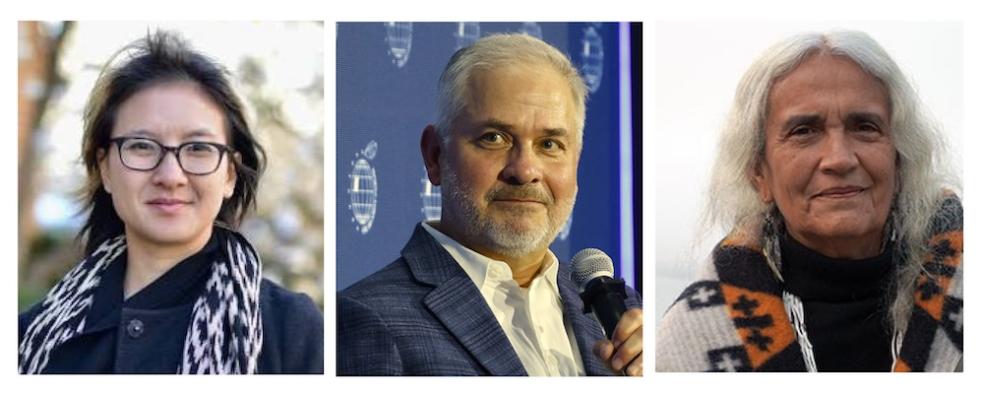
The featured speakers, Anita Say Chan, Roberto J. González, and Judge and alumna Abby Abinanti, will approach topics spanning technology, anthropology, law, and tribal justice.
Keynote Events
Monday, October 19, 5:30 - 7:00 p.m.
Goodwin Forum (NHE 102)
Anita Say Chan is a feminist and decolonial scholar of science and technology studies and a professor at the University of Illinois Urbana-Champaign. Her open-access book, Predatory Data: Eugenics in Big Tech and Our Fight for an Independent Future, connects contemporary data and surveillance practices to the history of eugenics, showing how technological systems can reproduce inequalities affecting immigrants and other marginalized communities.
Wednesday, Oct. 21, 6 - 7 p.m
Goodwin Forum (NHE 102)
Roberto J. González is a professor of Anthropology at San José State University whose work examines technology, militarization, and social control. His book War Virtually: The Quest to Automate Conflict, Militarize Data, and Predict the Future explores the use of algorithms and big data by U.S. military and intelligence agencies. His current research focuses on technofascism and the effects of algorithmic policing and surveillance on communities of color.
Thursday, Oct. 22, 3 - 4 p.m.
Goodwin Forum (NHE 102)
Judge Abby Abinanti (‘70, Journalism), an enrolled member of the Yurok Tribe, is the chief judge of the Yurok Tribal Court. She was the first Native American woman to pass the California bar and the first Native American woman in California to become a state judge. Known throughout Indian Country as Judge Abby, she incorporates traditional cultural values and rehabilitative practices into judicial proceedings, offering alternatives to conventional criminal justice models.
Food and refreshments will be served at keynote events.
Some CDOR sessions may address sensitive subjects, including grief, loss, and decolonization. Counseling & Psychological Services will be available for students at select events to support participants.
For the complete schedule, workshop information, and event locations, visit the Campus & Community Dialogue on Race website.