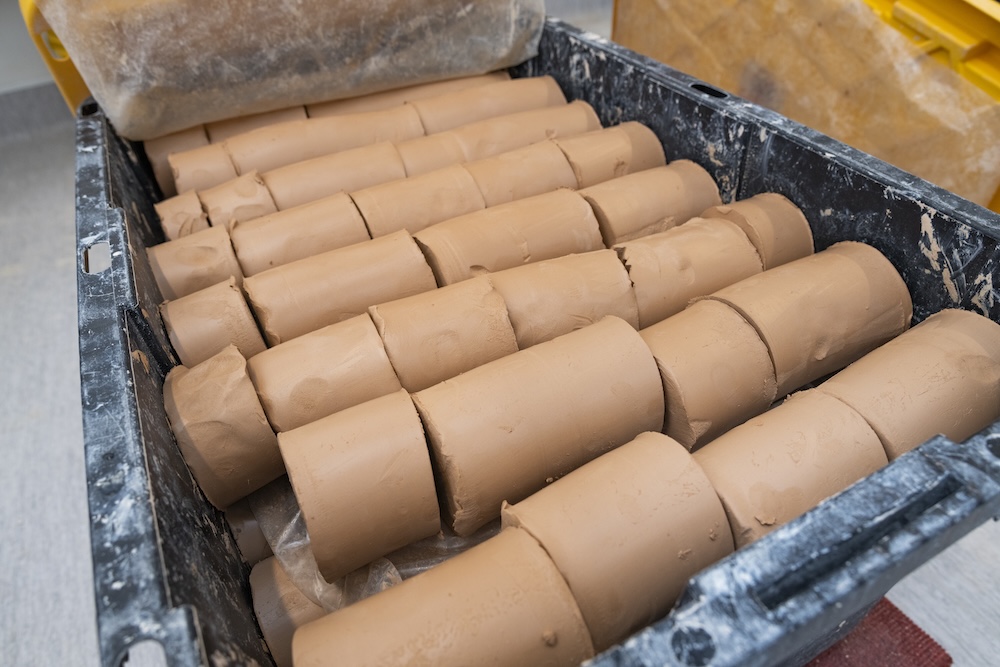
Unfired scraps left behind from class projects would typically be discarded if they’re too wet or too dry to use. Luckily, Ceramics Lab technician Christopher Dubois, works with students to recycle them—keeping about two tons of clay out of the landfill each semester and reducing student costs.
Last year, Dubois, one of three 2026 Sustainability Champions, instituted the lab’s first formal clay recycling program, reducing waste as well as extraction of finite materials. Through this effort, the Ceramics Lab donates free clay to roughly 300 students each year, offsetting their materials fees, and making ceramics more accessible.
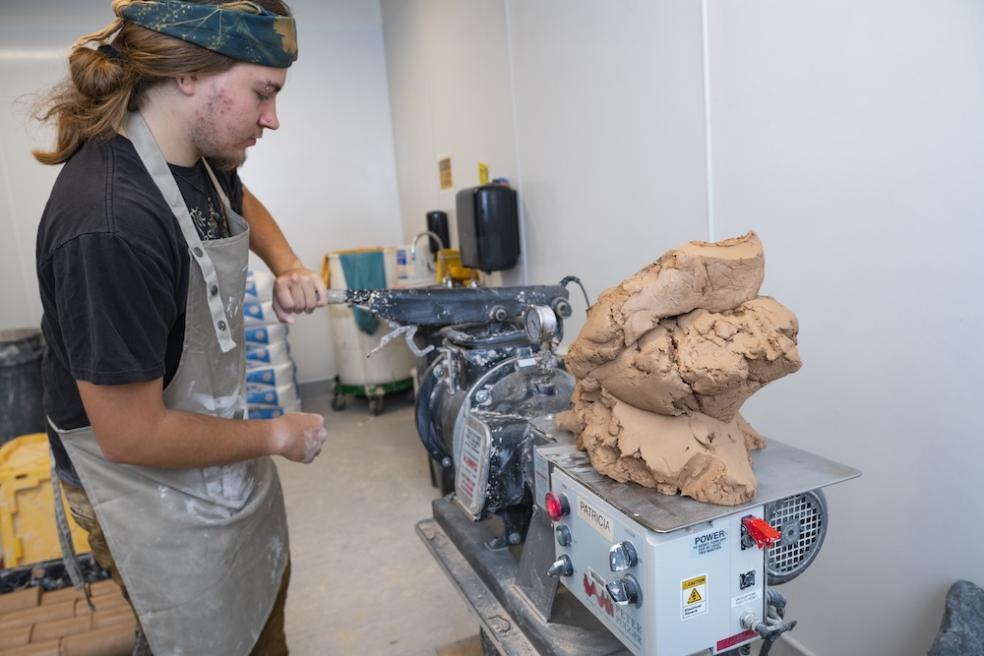
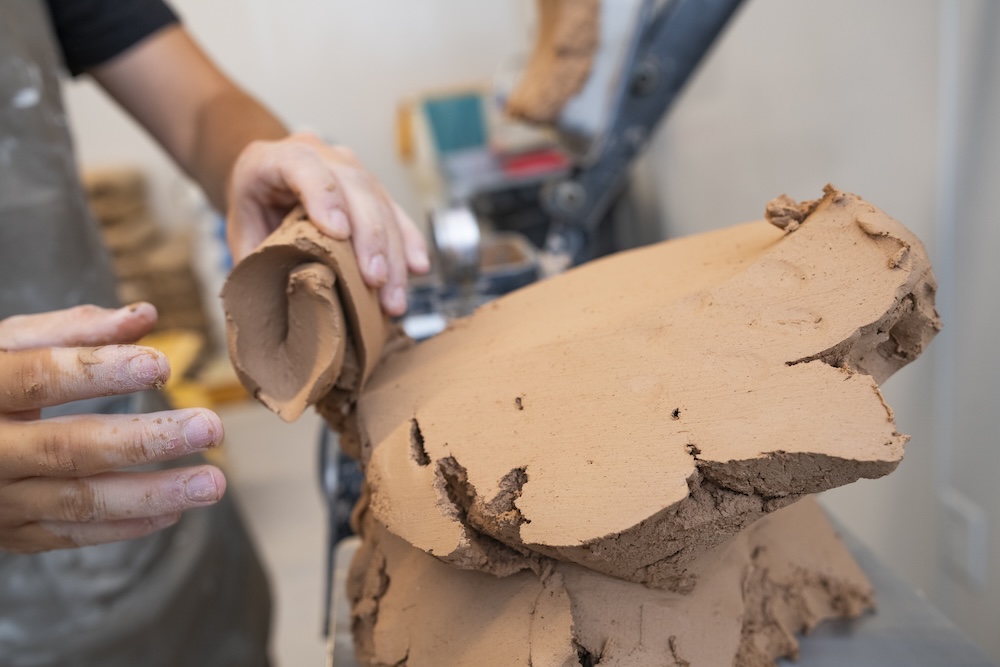
The Ceramics Lab, located in the newly renovated Jenkins Hall, is equipped with a clay reclamation room with two clay mixers and a pug mill, which blends scraps and moisture into a uniform consistency for easier reuse.
“We’ve noticed clay prices continuing to rise in the past few years, and we don’t want these costs to keep falling on students,” Dubois says. “This program is an easy way to save money, keep a closed loop of reuse, and teach students how to properly make and work with recycled materials in their art practice.”
Another resource the program takes advantage of is clay that can be sourced directly from the ground, also known as ‘wild clay.’ From construction sites to seaside bluffs, there’s plenty of clay all over Humboldt that, with some care and processing, can be used for both claywork and glazes, allowing students to learn in and from the environment.
Last year, when the University’s eco-demonstration house, the Campus Center for Appropriate Technology (CCAT), dug out earth to make garden boxes, Ceramics students used wild clay to create planters. Those planters were donated back to CCAT and used to grow plants—another example of how campus reuses materials.
Unlike unfired scraps, which can be reclaimed and reused as clay, fired pieces that are flawed or broken can’t be recycled in the same way. Instead, some find an unlikely second life in roads, sidewalks, and even in the Arcata Community Forest, thanks to collaborations with local companies like Kernan Construction and Alves. The companies use discarded clay and other campus materials for many of the City of Arcata’s road base projects.
In 2022, Cal Poly Humboldt’s Climate Action Plan set the goal of achieving carbon neutrality no later than 2045—an effort that is showing measurable progress. Simple initiatives like the Ceramics Lab’s clay recycling and reclamation projects create a significant impact over time.
“These are just a few of the many ways faculty, staff, and student-driven activities work to fulfill the goals set out in our plan,” says Morgan King, Cal Poly Humboldt’s climate action analyst. “No single initiative will achieve carbon neutrality on its own, but projects like these demonstrate how practical, sustained changes across campus can add up to meaningful progress.”