The program weaves together the arts, humanities, and sciences. Students explore how land, food, and farming are shaped by history, culture, and power while building hands-on skills and community-rooted practice. Agroecology, food sovereignty, the ecological knowledges of communities of color, and climate-just futures are emphasized.
“We’re building an inclusive recruitment strategy—drawing students from a range of backgrounds, from agriculture programs in rural high schools to urban students leading in community gardens,” says program leader and Environmental Studies Professor Renée Byrd. “Critical Agriculture Studies & Agroecology is about challenging the conventional image of who a farmer is and who agriculture is for. We’re making room for the brilliance and lived experience of people who have long been doing food and land work—often without being recognized—and preparing them to transform our food system through community-rooted agriculture.”
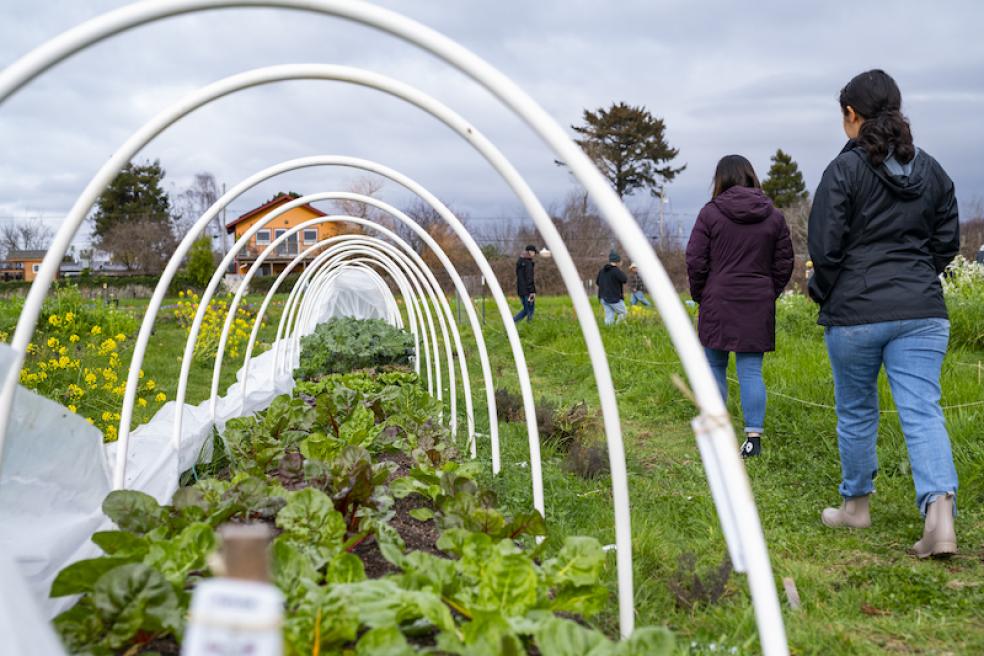
Coursework comes alive at Cal Poly Humboldt’s farm in Arcata, where students will learn first-hand agroecological practices, land stewardship, and food sovereignty in action—linking critical inquiry with applied experience and preparing students to lead in diverse rural and urban communities.
Cal Poly Humboldt also aims to build a clear transfer pathway for graduates of College of the Redwoods’ Agriculture program and other community colleges, creating an opportunity for students with technical agricultural training to deepen their knowledge in food systems analysis, policy, and community-based leadership.
The program—housed in the College of Arts, Humanities & Social Sciences (CAHSS), within the Department of Environmental Studies–will balance a rural focus on the unique assets of the North Coast with preparing students coming from and returning to a variety of communities, from small rural towns to urban environments. The program is intentionally inclusive of urban agriculture and food sovereignty work led by—and for—marginalized communities in the range of places our students call home. Students will examine the distinct conditions that shape access to land, healthy food, and dignified livelihoods across contexts, while developing practical skills for building community-based food projects, mutual aid networks, and culturally grounded growing practices.
“Students from this program will develop a strong critical analysis of food systems while also learning how to successfully grow and manage a variety of crops through different methodologies,” CAHSS Dean Jeff Crane says.
Graduates of the program will be prepared for careers on small regenerative farms, larger-scale agricultural operations, in urban community gardens, as farm-to-school education coordinators, policy analysts, value-added product entrepreneurs, community organizers, and more. The curriculum represents a diverse range of fields, bringing together faculty from multiple disciplines, departments, and programs, including health and nutrition, Rangeland Resource Science, Native American Studies, School of Engineering, Environmental History, Environmental Science & Management, Sustainable Food Systems, and Critical Race, Gender & Sexuality Studies.
Community collaboration is central to the program’s design. Students work with the community and engage in local projects through service learning and internships. Local farmers, tribal leaders, and agricultural professionals collaborate through workshops, guest lectures, and applied learning opportunities.
By bringing together critical inquiry and land-based practice, the Critical Agriculture Studies & Agroecology B.A. reflects Cal Poly Humboldt’s broader vision as a polytechnic university grounded in social and environmental responsibility, hands-on learning, and career preparation.
To learn more about this new program, listen to the Critical Agriculture Studies & Agroecology with Renée Byrd episode of the Majors & Minors at Cal Poly Humboldt podcast.