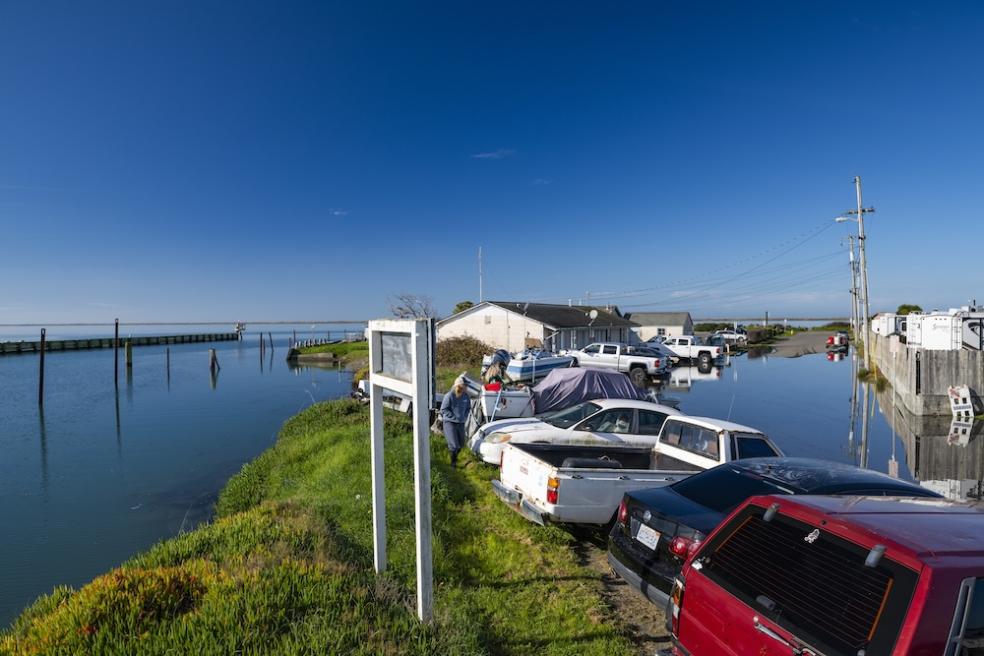
Climate change presents significant challenges for California’s North Coast, where Humboldt Bay is experiencing the state’s highest rate of sea-level rise. A new report brings together the latest climate science with local and Tribal knowledge to help communities prepare and develop solutions.
The North Coast Regional Report—released this October as part of California’s Fifth Climate Change Assessment—covers Humboldt, Mendocino, Del Norte, Lake, Siskiyou, and Trinity counties.
Conducted by the Governor’s Office of Land Use & Climate Innovation, the Climate Change Assessment examines impacts and projections in nine regions across the state, highlighting each region’s unique vulnerabilities and opportunities.
Regions include: the North Coast, Sacramento Valley, San Joaquin Valley, San Francisco Bay Area, Central Coast, Sierra Nevada, Los Angeles, Inland Deserts, and San Diego. Each focuses on the unique climate vulnerabilities and opportunities specific regions face.
The North Coast report emphasizes the region’s dependence on infrastructure that lacks redundancies. When these systems fail, the impacts cascade through every aspect of community life, from basic services to economic stability. The report also highlights Tribal leadership and local strategies that offer more promising pathways than conventional infrastructure approaches.
“Our climate has changed and will continue to change at accelerating rates, bringing coastal flooding, heatwaves, fire, drought, and flooding. By highlighting the unique strengths and challenges of our region, this report will be an important resource to help communities prepare,” says Andrew Stubblefield, co-author of the report and Forestry, Fire & Rangeland Management professor at Cal Poly Humboldt. “Preparing for climate change requires understanding the science as well as working with researchers, Tribes, and local communities to develop regional priorities and approaches that work.”
“We face some significant challenges, from increasing wildfire risk to reliance on roads with limited alternatives,” says the report’s co-author Rosemary Sherriff, Cal Poly Humboldt Geography, Environment & Spatial Analysis. “But we also have important strengths to build on, including Indigenous stewardship and Tribal knowledge, restoration and climate resilience efforts, and examples of community resilience models.”
“Regional knowledge matters,” she adds. “Understanding both the risks we face here and the work already underway can help communities prepare for what’s ahead.”
The North Coast Regional Report and other regional reports included in California’s Fifth Climate Change Assessment is availble at https://climateassessment.ca.gov.