This issue of Cal Poly Humboldt’s multilingual literary magazine seeks to break the taboo of sex with a collection of diverse voices celebrating sex, gender, and intimacy.
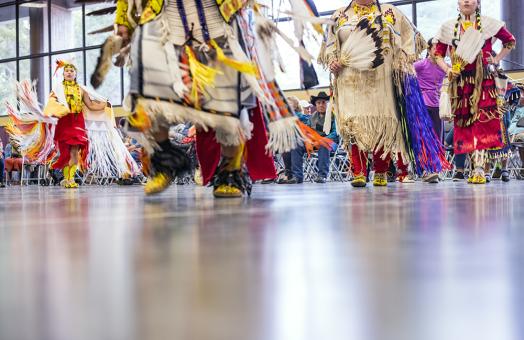
The event is a cultural sharing of traditional California tribal dance and songs. It is acknowledgment of the sacred lands of the Wiyot people on which the campus is built. And, it honors the culture of California Native American tribes.
Films are a catalyst for change. They can affect animal and human rights, destigmatize disease, and ignite social movements. Harnessing this power motivates Cal Poly Humboldt Film students to drive social change and amplify voices, including their own.
El Leñador, Cal Poly Humboldt’s monthly bilingual student publication, won a First Place Best of Show award at the 2023 Associated Collegiate Press (ACP) Spring National College Media Conference in San Francisco in March.
Cal Poly Humboldt’s Goudi’ni Native American Arts Gallery presents LAND BACK: Artwork of Ka'ila Farrell-Smith, a visual artist, writer and activist located in Modoc Point, Oregon. Featuring paintings and traditional Indigenous art practices, she explores the space between the Indigenous and western paradigms.
Save California Salmon and Cal Poly Humboldt’s Native American Studies Department will be hosting the Northern California LandBack Symposium on Friday, March 24, at the Goodwin Forum at Cal Poly Humboldt.
The Department of Dance, Music & Theatre at Cal Poly Humboldt and Associated Students presents “Radium Girls” written by D.W. Gregory and directed by James Peck. Opening night is March 24 at 7:30 p.m. at the John Van Duzer Theatre.
The 24th International Latino Film Festival kicks off Tuesday, Feb. 28 with a series of film screenings at the Mill Creek Cinema in McKinleyville from 6-10:20 p.m.
“More Than A Number” is an exhibition that features more than a dozen artists from Pelican Bay State Prison in Crescent City. Paintings, papercraft, crochet, beadwork, drawings, and carvings will be on display at Cal Poly Humboldt’s Reese Bullen Gallery from Feb. 16 to March 11.
In honor of its commitment to more sustainable, just, and diverse futures, Cal Poly Humboldt is kicking off the 24th International Education Week (IEW) on Monday, Feb. 6.
Cal Poly Humboldt presents the “Welcome to Spring Semester” recital, an evening of wide-ranging music, with performances by faculty and alumni, on Saturday, Feb. 4 at 8 p.m. in Fulkerson Recital Hall.
The Rou Dalagurr Food Sovereignty Lab and Traditional Ecological Knowledges Institute at Cal Poly Humboldt received a $1 million Elevate Youth California: Youth Substance Use Disorder Prevention Program Grant which will support the Food for Indigenous Futures Program.
Cal Poly Humboldt continues to grow its Place-Based Learning Communities, which offer first-year students improved connections to local communities and each other.
Cal Poly Humboldt students, along with faculty and staff, will travel to Cebu, Philippines, for a newly launched International Service Learning Program this spring to explore Philippine history and culture, work with peers, and engage in hands-on learning experiences with local high schools.
Each May, more than a thousand Cal Poly Humboldt students take part in Commencement. For two students, the ceremony will be particularly meaningful as they walk across the stage to receive their diplomas on Saturday.
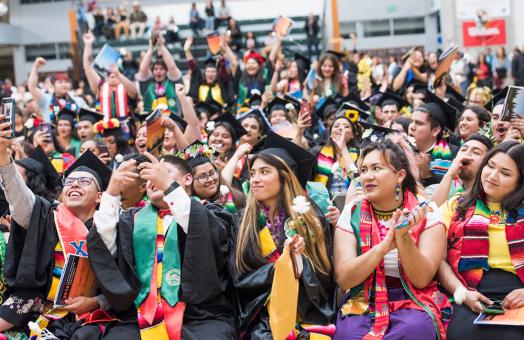
For the first time in two years, due to the pandemic, the Cultural Graduation Celebrations will be held in person prior to the Cal Poly Humboldt Commencement ceremonies. These collaborative events will honor the rich cultural heritage, knowledge, and resilience diverse students contribute to campus.
Compelling films from around the world will be featured in the 55th annual Humboldt Int’l Film Festival, billed as the longest student-run film fest in the world.
In a unique fusion of music and poetry, Cal Poly Humboldt is hosting “Sana, Sana: Hope and Healing for Latinx Communities in Times of Precarity.” The free performance on Sunday, April 24 is inspired by a poetry contest on the theme of hope and healing in Latinx communities.
The roots and branches of cannabis research extend well beyond its traditional beds of botany and social justice, spreading tendrils to settler colonialism, global capitalism, and environmental stewardship. This was the impetus behind a book edited by the co-directors of Cal Poly Humboldt’s Humboldt institute for Interdisciplinary Marijuana Research.