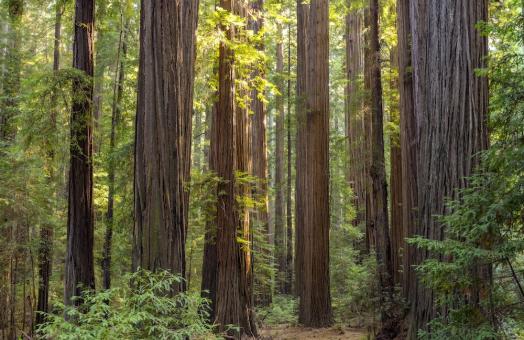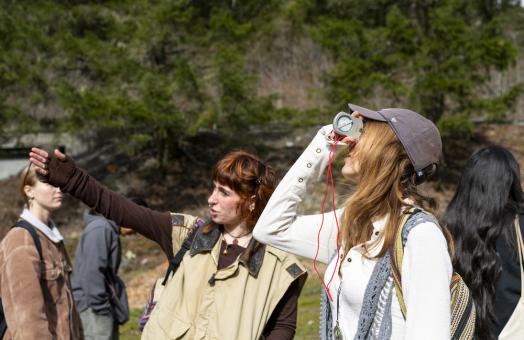
Cal Poly Humboldt study in partnership with Save the Redwoods League reveals how second-growth forests respond to modern wildfires and what managers can do to protect them.
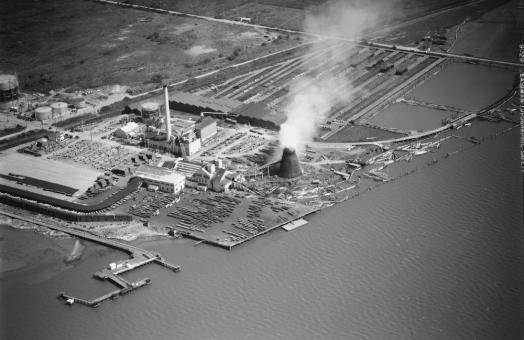
A new report from the Schatz Energy Research Center at Cal Poly Humboldt examines the entwined history of energy development and timber production in Humboldt County—and looks at how transmission system expansion for offshore wind could empower greater energy access on the North Coast.
Since 2011, Cal Poly Humboldt secured more than $1 billion in external funding, advancing breakthroughs in gene therapy, clean energy, climate science, community health, the arts, and student success programs while providing students hands-on opportunities to shape the future.
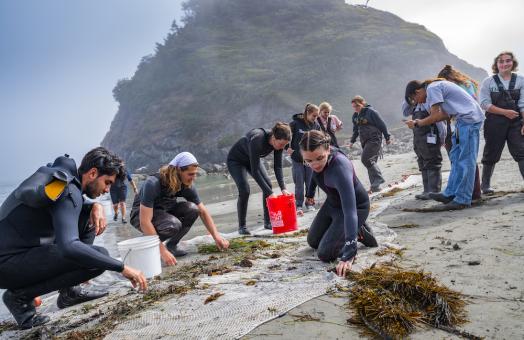
At 4:30 a.m., before the first rays of sun reach the waters surrounding the Galápagos Islands, trillions of phytoplankton drift in the dark, waiting for the light of dawn to trigger photosynthesis—the process that releases oxygen and energy into the ocean and the marine food web.
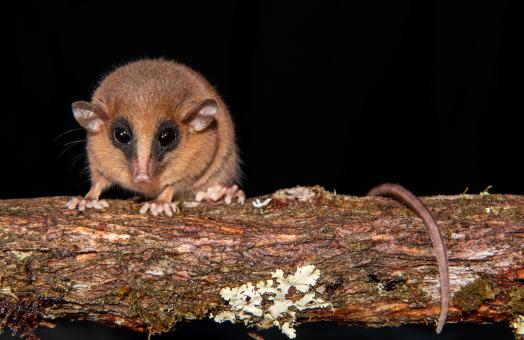
During an expedition to the Peruvian Andes in 2018, a team of researchers exploring Abiseo River National Park, a UNESCO World Heritage site, made an extraordinary discovery: a previously undocumented species of marsupial.
Cal Poly Humboldt’s publication, Humboldt Magazine, is entering a new era. The Fall 2025 edition marks the magazine’s first fully digital release, offering readers an immersive experience with expanded photo galleries, behind-the-scenes video, and interactive storytelling.
Cal Poly Humboldt is taking a leading role in advancing global research infrastructure, leveraging its unique position on California’s North Coast to connect researchers across the Pacific Rim.
The overall inflation rate of 4.4% in Eureka and surrounding cities from 2024 to 2025 was slightly down from last year’s rate of 4.5%, according to student-led research by Cal Poly Humboldt released in May.
A raindrop landing on a tree branch may do more than just roll off or evaporate—it might be absorbed directly into the twig itself. That’s the surprising and significant finding of a new study led by Cal Poly Humboldt Botany Professor Alana Chin, recently published in the Journal of Experimental Botany.
For the final talk in this semester’s Climate and Clean Energy Series—“Scaling Our Energy Future: Insights from the Utility Sector”—PG&E Executive Vice President Carla J. Peterman will describe how the utility plans to scale the energy system to meet growing power demand, decarbonization, and resiliency goals, while ensuring that energy remains affordable.
From research presentations to live performances, the 12th annual ideaFest will once again transform the Library into a hub of innovation and creativity on Friday, May 2, at the Cal Poly Humboldt Library from 2-5 p.m.
The Humboldt-Emeritus & Retired Faculty & Staff Association (ERFSA) Executive Committee is pleased to announce the recipients of the 2025 ERFSA Small Grant Awards.
Cal Poly Humboldt has officially broken ground on the Energy Research + Sustainability Center (ER+SC)—a hub dedicated to cutting-edge research in sustainability and cultivating the next generation of environmental leaders.
For years, archaeologists believed the ruins in North Macedonia—first excavated more than 15 years ago—were the remains of a military outpost built to defend against Roman attacks.
Humboldt's flying squirrel, recently identified as a distinct species in 2017 native to forests in the Pacific Northwest, the Sierra Nevada, and Southern California, has a unique way of communicating with ultrasonic vocalizations—sounds beyond human hearing.
Cal Poly Humboldt welcomed its newest research vessel, the R/V North Wind, into Humboldt Bay. The R/V North Wind traveled approximately 550 miles from Bellingham Bay, Washington, where it underwent various tests and sea trials for fine-tuning.
As climate change accelerates, mature forests may struggle to survive. A recent study reveals that older trees retain a ‘memory’ of past water conditions, making it harder for them to adapt to drier environments.
Cal Poly Humboldt Sociology instructor Daniel Mar is playing a vital role in the future of sustainable cannabis farming in Humboldt and Mendocino counties.